
Do You Need a UAE Transit Visa for a Connecting Flight?
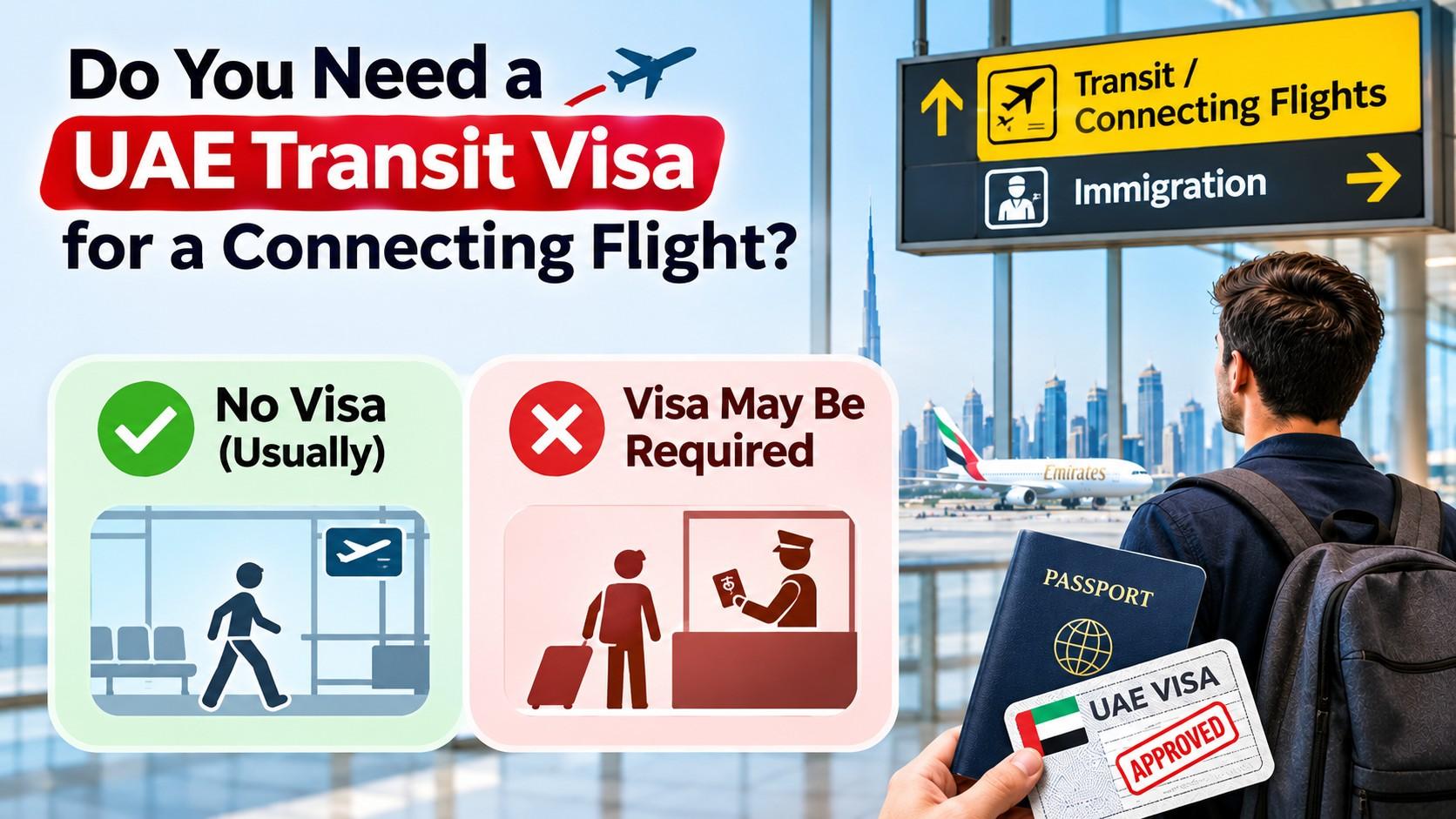
Usually, no, as long as you stay airside. A UAE transit visa for a connecting flight only matters when you have to enter the country. Four things decide it: whether you stay in the international transit area, whether you must pass UAE immigration, whether your passport gets visa-free entry or visa on arrival, and whether your ticket forces you to collect bags or self-transfer. Check the UAE transit visa requirements for your passport before you fly.
| Connecting-flight situation | Is a UAE visa required? |
Staying inside the international transit area | Generally, no UAE entry visa |
| Leaving the airport during the layover | Entry permission may be required |
Eligible for visa on arrival | A pre-arranged visa may be required |
| Not eligible for visa-free or visa-on-arrival entry, and leaving the airport | A pre-arranged visa may be required |
Separate tickets needing immigration or baggage collection | A pre-arranged visa may be required |
| Changing between UAE airports | Entry permission may be required |
Not sure which row is yours? Keep reading; confirm it before you book.
When Do You Not Need a UAE Transit Visa?
Airside transit is a clever idea. When you land, just walk to your next gate and never officially enter the UAE.
When you stay inside the international transit area
No need to visit the immigration desk or the airport exit. You follow the transfer signs to your connecting gate and stay in the secure zone the whole time. Because you never enter the country, you generally don’t need a UAE entry visa.
When your baggage is checked through to your final destination
If the airline tags your bags to your last stop, you never touch them in the UAE. That makes an airside connection much simpler.
When your connecting itinerary allows an airside transfer
Don’t assume every connection works the same way. Ask your airline or the airport whether your specific itinerary can stay airside.
When Do You Need a UAE Transit Visa for a Connecting Flight?
You may need a UAE visa when you have to enter the UAE rather than simply transit airside.
You want to leave the airport during your layover.
Maybe you want to see Dubai, sleep at a hotel outside the airport, meet a friend, or attend a business meeting. Once you leave, your nationality decides whether you can use visa-free entry or visa on arrival, or whether you need a visa arranged in advance.
You need to pass through UAE immigration.
This is the place where most of the travellers miss. Transit means staying airside. Entry means passing immigration and stepping into the UAE. A UAE transit visa only makes sense for the second case.
Planning to step out of the airport? Apply for a UAE transit visa before you fly, so nothing holds you up at the immigration desk.
Do You Need a UAE Visa If You Don’t Leave the Airport?
Usually no. If you stay airside in the international transit area and board your connection, you haven’t entered the UAE. Baggage and ticketing can change that. A connecting flight alone doesn’t guarantee you can stay airside. Your airline and itinerary decide whether you can finish the connection without immigration. Check before you travel. If your itinerary isn’t clear-cut, check the UAE visa for connecting flight options so you’re covered either way.
Do Separate Tickets Affect Your UAE Transit Visa Requirement?
Yes, and this is where trips go wrong. Separate bookings, different airlines, and self-transfers are often unprotected connections. You may have to collect your bags, re-check them, and clear immigration. That means entering the UAE.
Booking type | What to check |
| Single through-ticket | Is baggage checked through? |
Separate tickets | Do you need immigration or baggage collection? |
| Different airlines | Is an airside transfer supported? |
Self-transfer | Do you need to enter the UAE? |
| Different UAE airports | Do you need entry permission? |
A confirmed onward ticket doesn’t automatically mean you can stay airside. If delays are your worry, read what to do when your connecting flight delayed in the Dubai situation turns into a missed connection.
Do You Need a Visa for a Dubai Layover?
Layover length alone doesn’t decide it. The real formula is layover plus nationality, along with the airside or landside status and itinerary requirements.
Short layover in Dubai
An ordinary airside connection. Walk to your gate and board.
Long layover in Dubai
A long wait doesn’t force a visa on you if you stay airside. Eight hours in the transit area is still transit.
Overnight layover in Dubai
Resting inside the airport’s transit area is different from checking into a landside hotel. The hotel means you’ve entered the UAE.
Layover where you want to visit Dubai
Leaving the airport brings UAE entry rules into play. Plan the visa before you fly, not at the immigration desk.
Does Your Nationality Affect the UAE Transit Visa Requirement?
Yes. Your passport nationality matters a lot. It decides whether you get visa-free entry, a visa on arrival, or need a pre-arranged visa or transit visa. Where you live doesn’t automatically change that. Someone living in the UK on an Indian passport follows the rules for the Indian passport. Not sure where you stand? Look at the UAE visa on arrival eligibility first. If your passport isn’t on that list, check your UAE transit visa options next.
What Is a UAE Transit Visa?
It’s a short-stay permit for people who need to leave the airport during a stopover. The two common types are 48 hours and 96 hours. Each is single-entry, and you arrange it before you enter the UAE, where it applies. It isn’t the same as a normal tourist visa, which allows a longer stay.
Looking at options? See the 48-hour and 96-hour UAE transit visa details before you decide.
48-Hour vs 96-Hour UAE Transit Visa
| Feature | 48-Hour | 96-Hour |
Maximum stay | 48 hours | 96 hours |
| Entry | Single | Single |
Best for | Short stopovers | Longer stopovers |
| Extension | Not generally extendable | Not generally extendable |
Rules change, so verify the latest requirements before you apply. Once you’ve picked your stay length, apply for the right UAE transit visa in a few minutes.
What Are the UAE Transit Visa Requirements for a Connecting Flight?
Keep it simple. You’ll typically need:
- A valid passport, with enough validity left
- A recent passport photograph
- A confirmed onward ticket
- The application details requested
- Extra documents, depending on the application or airline
The full list sits on the page for UAE transit visa requirements and documents.
Common Connecting Flight Scenarios in the UAE
Connecting flights through Dubai without leaving the airport
Pure airside transit. Usually no entry visa.
Connecting flights through Dubai with a 6-hour layover
6 hours doesn’t decide anything. Staying airside does.
Overnight connecting flight in Dubai
Airside rest is transit. A landside hotel is considered entry.
Separate tickets for a Dubai connection
Self-transfer usually means baggage collection and immigration.
Changing airports in Dubai
Travelling between airports can require entering the UAE.
Connecting through Abu Dhabi
The same airside-versus-entry idea applies. Airport and airline procedures can differ, so confirm yours.
What Happens If Your Connecting Flight Is Delayed?
A delay can change your plans, especially if you miss the connection or need to stay longer. We cover it fully in our guide on what happens if your connecting flight is delayed.
How to Check If You Need a UAE Transit Visa Before Your Flight
Step 1: Check your passport nationality.
See whether you qualify for visa-free entry, visa on arrival, or a pre-arranged visa.
Step 2: Check whether you can remain airside.
Ask the airline: Can I transfer without immigration? Is my baggage checked through? Must I collect and re-check it?
Step 3: Check your ticket arrangement.
One booking, separate tickets, self-transfer, or different airlines?
Step 4: Check your airport/terminal transfer.
Will you change terminals, change airports, or leave the secure transit area?
Step 5: Determine whether you need UAE entry permission.
If you must enter the UAE and don’t qualify for visa-free entry or visa on arrival, look at a pre-arranged visa.
Common Mistakes Travellers Make With UAE Transit Visas
- Assuming every connecting flight needs a transit visa
- Thinking an onward ticket means no visa is needed
- Ignoring separate-ticket and self-transfer rules
- Forgetting baggage collection
- Assuming a long layover always needs a visa
- Assuming a short layover never does
- Confusing a visa on arrival with a transit visa
- Believing your country of residence sets your eligibility
- Changing airports without checking entry rules
- Trusting outdated visa information
Avoid the last one by reading the current UAE transit visa requirements before you book.
Frequently Asked Questions
Q. Do I need a UAE transit visa for a connecting flight?
A. Not if you stay airside and continue without entering the UAE.
Q. Do I need a UAE visa if I don’t leave the airport?
A. Generally no, unless baggage or ticketing forces you through immigration.
Q. Do I need a transit visa for a layover in Dubai?
A. Only if you must enter the UAE and don’t qualify for visa-free entry or visa on arrival.
Q. Do I need a visa for a connecting flight in Dubai?
A. Same rule. Staying airside usually means no entry visa.
Q. Can I leave Dubai Airport during a layover?
A. Yes, if you meet UAE entry requirements for your passport.
Final Takeaway
If you can stay airside and reach your connecting flight without entering the UAE, you generally don’t need a UAE entry visa. If you must pass immigration or leave the airport, your nationality and entry eligibility decide whether you need a pre-arranged visa or can use the visa on arrival.
Need a UAE transit visa for your connecting flight? Check the available transit visa options, eligibility requirements, and required documents before your journey. Ready to go? Apply for a UAE transit visa today. Check UAE Transit Visa Options