Dubai Visa from Morocco: Which Tourist Visa Option Fits Your Trip?
Yes. Moroccan passport holders do need a Dubai visa from Morocco before they
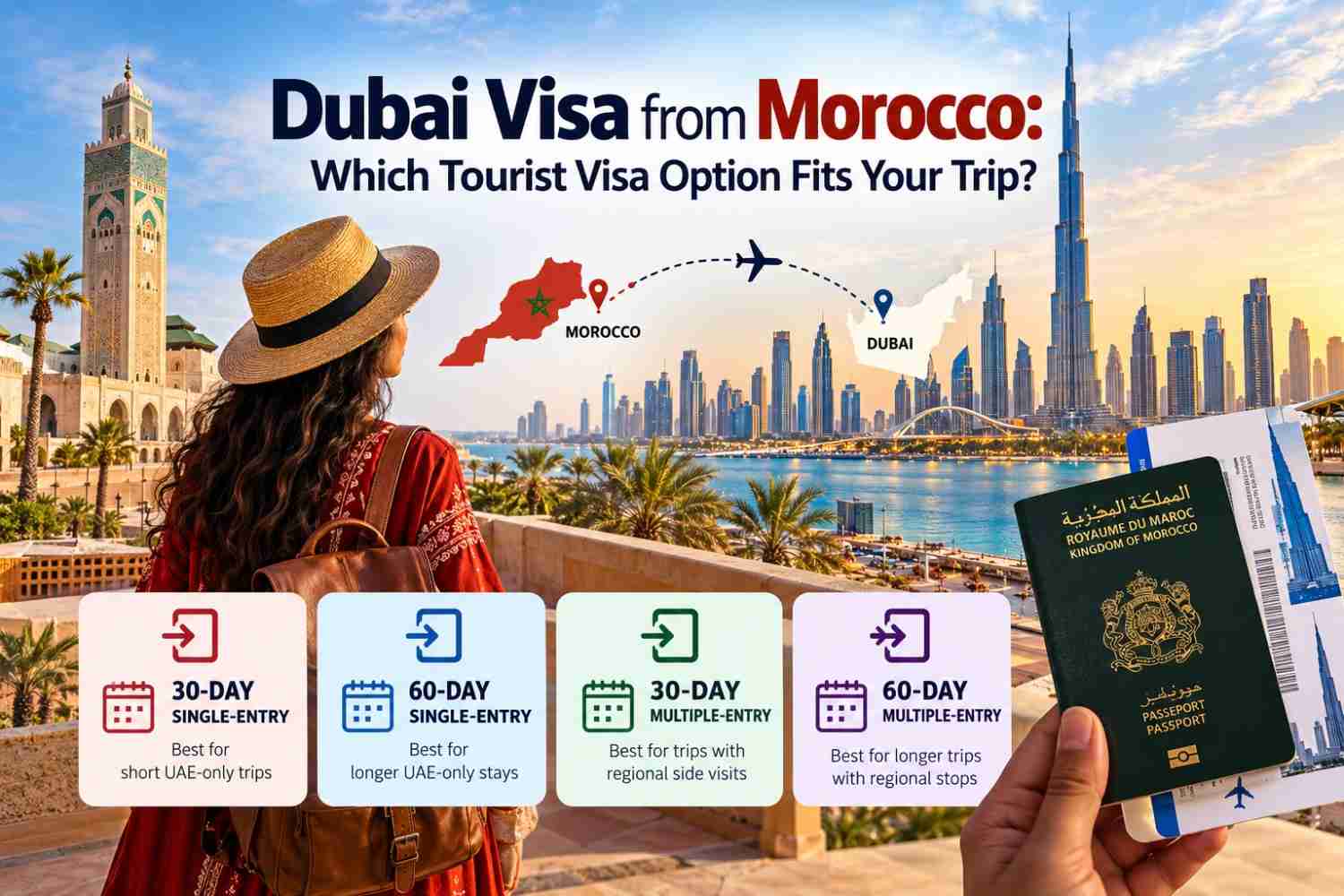
Travel, and the UAE does not offer visa-free entry or visa-on-arrival for Moroccan citizens, so this has to be sorted out ahead of time, not at the airport. The good news is that there isn’t just one rigid option. Based on how long you’re staying and whether you plan to fly into another Gulf country along the way, you can choose from four main tourist visa types:
- 30-day single-entry
- 60-day single-entry
- 30-day multiple-entry
- 60-day multiple-entry
There’s also a longer-term 5-year multiple-entry visa for frequent travelers, which falls in a different pricing bracket and warrants a separate conversation.
Dubai Tourist Visa Options for Moroccan Citizens
The next step, after you know a visa is non-negotiable, is which one actually fits your trip. Here’s how the standard Dubai tourist visa for Moroccan citizens options stack up against each other:
Visa Option | Entry Type | Duration | Best For |
| 30-day single-entry | Single | 30 days per stay | Short UAE-only trip |
| 60-day single-entry | Single | 60 days from entry | Longer UAE-only stay |
30-day multiple-entry | Multiple | 30 days per stay | Trip with regional side visits |
| 60-day multiple-entry | Multiple | 60 days per stay | Longer trip with regional stops |
Beyond these four, the 5-year multiple-entry visa exists for travelers who visit the UAE regularly and want to avoid repeated applications, but it comes at a higher cost and has its own eligibility terms.
Short Trip or Longer Trip? How to Choose the Right Visa
This is really where most people get stuck, and it’s worth slowing down here instead of guessing.
Travel Scenario | Suitable Option | Why |
Under 30 days, UAE only | 30-day single-entry | Matches your trip length, lowest fee |
| 31–60 days, UAE only | 60-day single-entry | Covers the full stay, no need to extend |
UAE + one other country, returning | Multiple-entry (matched to trip length) | Single entry can’t be reused once you’ve exited |
| Multiple trips across the year | 5-year multiple-entry | Removes the need to reapply each time |
If you’re not sure about how long you’ll stay, it’s usually smarter to go slightly longer than you think you’ll need rather than risk an overstay. Once you’ve matched your scenario to an option above, you can go ahead and apply for your Dubai visa from Morocco with confidence that you’ve picked the right one.
Visa Validity vs. How Long You Can Actually Stay
This trips up a lot of first-time applicants. Visa validity is the window during which you’re allowed to enter the UAE using that visa. Permitted stay is the number of days you’re allowed to remain in the country once you’ve actually entered, and that count starts from your entry date, not the date the visa was issued. Say you’re approved for a 30-day visa with a three-month validity window. You could enter any time within those three months, but from the moment you land, the clock starts on your 30 days. With a multiple-entry visa, each entry resets that count, which is exactly why travelers doing a UAE-plus-GCC itinerary tend to need it.
Overstaying isn’t something to gamble with either. As of 11 February 2026, UAE overstay fines apply at AED 50 per day with no grace period, so it’s worth building in a buffer rather than cutting it fine.
Single-Entry vs. Multiple-Entry — Which Do You Need?
A quick way to decide:
Choose multiple-entry if:
- You’re planning side trips to other GCC countries and returning to the UAE
- Your itinerary isn’t fully fixed, and you might exit and re-enter
Single-entry is enough if:
- You’re staying in the UAE for the whole trip with no plans to leave and come back
Check out the full Dubai visa services before you apply.
Documents Moroccan Citizens Need for a Dubai Visa
Not everything on a typical checklist is strictly mandatory, so here’s what’s actually required versus what may come up depending on your application:
Document | Required? | Notes |
Passport (6-month validity) | Required | Confirm the current validity rule before applying |
| Recent passport photo | Required | White background |
Return or onward flight ticket | Required | Proof of intended departure |
| Proof of accommodation | Required | Hotel booking or host details |
Bank statement/proof of funds | May be required | Not always requested |
| Travel or medical insurance | May be required | Referenced in GDRFA single-entry visa terms |
How to Apply for a Dubai Visa from Morocco
- Select the visa type that fits your length of trip and entry requirements
- Gather the documents from the above checklist
- Get the application now
- Make a payment of the processing fees
- Check and cross-check your visa information with your passport
- Travel
Dubai Visa Processing Time for Moroccan Applicants
Normally, processing times are standard, but faster options may be available. Average processing time is 3-5 working days; express processing can accelerate the time to just 24-48 hours. Delays can happen if your paperwork isn’t complete, it’s a busy time to travel, or your application needs extra checks—it’s always safer to apply with a bit of breathing space.
Dubai Tourist Visa Cost for Moroccan Citizens
Pricing is split between the GDRFA government fee, which varies by visa type and duration, and any service fee charged by whoever is processing your application. VAT and small additional charges may also apply. Being upfront about this split matters, and it’s the difference between a quote that feels transparent and one that feels like it’s hiding something.
How Early Should You Apply?
Apply with a comfortable buffer beyond the standard processing window. Even if processing is usually quick, giving yourself extra time protects you against unexpected delays without adding any real cost.
Common Mistakes Moroccan Travelers Make When Choosing a Visa
- Choosing a single entry for a multi-country itinerary; you’ll find yourself locked out after the first exit.
- Confusing visa validity with permitted stay leads to accidental overstays
- Applying too close to travel dates, leaving no room for delays
- Assuming visa-on-arrival applies, but it actually doesn’t, for Moroccan passport holders
FAQs
Q. Do Moroccans need a Dubai visa?
A. Yes, it’s required in advance, with no visa-on-arrival option.
Q. Is a tourist visa the right category for leisure travel, or do I need something else?
A. A tourist visa is the correct category for holidays and leisure trips; other visa types apply to business or work purposes.
Q. What Dubai tourist visa options are available to Moroccan citizens?
A. Four main options: 30-day single-entry, 60-day single-entry, 30-day multiple-entry, and 60-day multiple-entry.
Q. Which visa is best for a short trip?
A. Single-entry 30-day visa; it is the cheapest option for short UAE-only stays.
Q. Which visa suits a longer stay?
A. A 60-day single-entry visa covers extended UAE-only trips without needing to extend later.
Q. Can Moroccan citizens get a multiple-entry Dubai visa?
A. Yes, both 30-day and 60-day multiple-entry visas are available.
Q. How do I apply for a Dubai visa from Morocco?
A. Complete the 8-step process above. Apply using the official application channel.
Q. Can I apply for a Dubai visa online from Morocco?
A. Yes, online application channels are available.
Q. How early should I apply for a Dubai visa from Morocco?
A. Apply with extra buffer time beyond the standard processing window to account for possible delays.
Q. How long can I stay in Dubai on a tourist visa?
A. This depends on permitted stay, not visa validity—see the section above for the distinction.
Ready to Apply for Your Dubai Visa?
Once you’ve matched your trip to the right duration and entry type, the rest is straightforward. Check your eligibility and start your Dubai visa application from Morocco, and for the wider range of visa support available, take a look at our Dubai visa services.