
Why Dubai Tourist Visa Applications Get Rejected
Losing a non-refundable visa fee is a horrible feeling, particularly when you’re not sure what went wrong. Every Dubai tourist visa decision is assessed case by case by GDRFA Dubai or ICP, and no agent, website, or checklist can guarantee approval. What this guide can do is walk you through the most common reasons applications get refused and what your next move should look like.
Why Can a Dubai Tourist Visa Be Rejected? (Quick Answer)
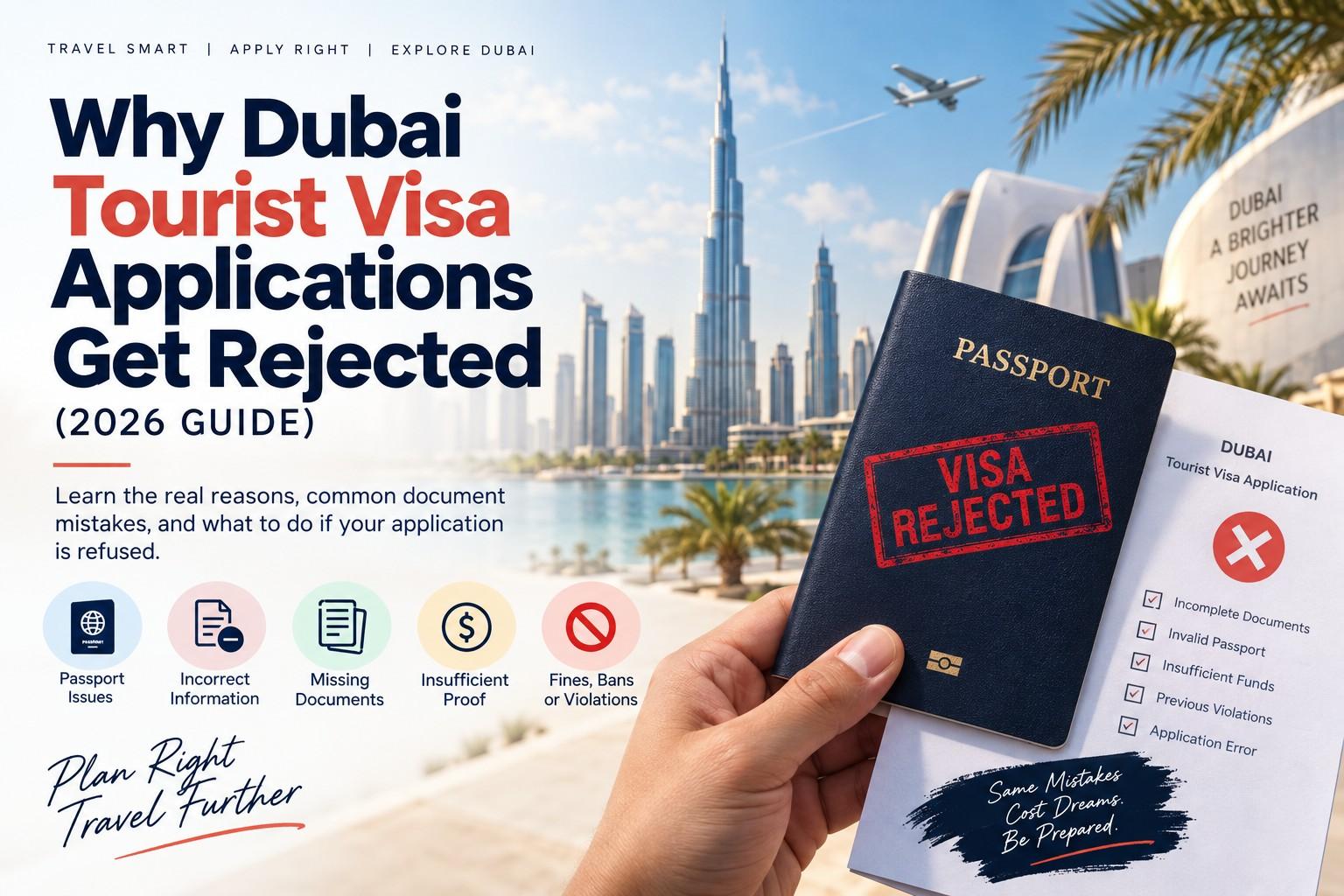
A Dubai visa rejection usually comes down to one of a handful of issues: passport problems, mismatched or incomplete application details, weak supporting documents, unresolved status from a previous UAE visa, unpaid fines, a past entry ban, or applying through an unreliable channel. Most of these are fixable once you know where to look.
Here’s a detailed version of how visa processing works.
Main Reasons Dubai Visa Applications Get Rejected
Passport validity or damage
Your passport needs at least six months’ validity from your arrival date, and it shouldn’t be torn, water-damaged, or missing pages. This is one of the few rules that’s clearly documented on official portals like u.ae and gdrfad.gov.ae, so it’s worth double-checking before you submit anything else.
Incorrect or inconsistent application information
A typo in your name, a wrong date of birth, or details that don’t match your passport exactly is a surprisingly common reason for Dubai visa refusal outcomes. Go through your form line by line against your passport bio page.
Missing or unclear documents
Blurry scans, a cropped MRZ (the machine-readable strip at the bottom of your passport), or a photo that doesn’t meet spec can all cause problems. These specs are documented, so it’s worth reviewing them properly rather than guessing.
Insufficient or unverifiable supporting documents
Proof of funds, a return ticket, and accommodation details fall into this bucket. The categories are documented, though exact thresholds (like a minimum bank balance) aren’t published anywhere official, so treat any specific number you see online with caution.
Uncancelled prior UAE visa or residence status
If an old UAE visa or residency wasn’t properly closed out, it can interfere with a new application. This is more of a practical consideration based on how the system tends to behave, rather than something spelled out in an official document.
Unpaid fines or prior violations
Outstanding fines need to be settled through ICP before a new visa can go through. If you think this applies to you, check the current fine amount directly, since these do change.
Previous entry ban or deportation
A formal ban or deportation record is a separate and more serious category from an ordinary rejection. This is documented on official sources like u.ae and adro.gov.ae.
Unreliable or unauthorized application channel
Going through an unverified agent or a channel with no clear accountability adds risk. It’s a practical point rather than an official rule, but it’s one worth taking seriously.
Document Mistakes That Can Cause Problems
|
Document/Field |
What to Verify | Common Mistake |
| Passport copy | Clear, full-page scan |
Cropped or blurry image |
|
Passport validity |
6+ months from arrival | Expiring too soon |
|
Photo |
Meets official spec |
Wrong background or size |
| Personal details | Matches passport exactly |
Name or DOB typo |
|
Supporting documents |
Complete and current | Outdated bank statement |
| Travel dates | Consistent across form |
Mismatched entry/exit dates |
|
Contact information |
Valid and reachable | Wrong phone number or email |
| Overall consistency | Every field cross-checked |
Details don’t match each other |
Rejected vs. Delayed vs. Additional Review
A rejection is a final refusal, a delay means processing is simply taking longer than usual, and additional review means the authorities need more information before deciding. If your status shows delayed, wait it out and avoid resubmitting. If it’s under review, be ready to respond quickly if asked for documents. Note that GDRFA Dubai and ICP run separate portals, so check the correct one for your application type.
What to Do If Your Dubai Visa Is Rejected
- Check your application status through the correct portal
- Go through a self-audit using the checklist above
- Confirm your passport and any prior UAE visa status are in order
- Contact your processing channel, but don’t expect a written reason; this usually isn’t provided
- Fix whatever issue you’ve confirmed
- Don’t resubmit the same application unchanged
- If you’re still unsure, get your application checked before you apply by someone experienced.
Can You Reapply After a Dubai Visa Rejection?
Yes, in most cases. There’s no official fixed waiting period published anywhere, so assume any specific number you see online is unverified. What matters more is that you don’t resubmit an unchanged application, since that tends to produce the same result.
Still not sure about it? Get your application checked before you apply.
Does a Previous Rejection Affect a New Application?
An ordinary rejection is not the same as a ban. It doesn’t follow you around or block future applications on its own. A formal entry ban or deportation record is a separate, more serious matter entirely, and it’s not something to assume applies to you unless you’ve been told so directly.
Myth vs. Fact
| Myth |
Fact |
|
One rejection means a permanent ban |
An ordinary rejection isn’t a ban unless separately confirmed |
|
Low bank balance is always the cause |
Funds are one of several document categories, not a single default reason |
| Reapplying immediately with the same form works |
Resubmitting unchanged tends to produce the same result |
|
An agent can guarantee approval |
No one can guarantee a GDRFA/ICP decision |
| Rejection is always the applicant’s fault |
Channel issues and system factors can also play a role |
|
A pending status means rejected |
Pending just means the decision isn’t made yet |
| There’s a universal waiting period to reapply |
No fixed period is officially published |
| GDRFA always explains the reason |
A written reason usually isn’t provided |
FAQs
Q. Why is my Dubai visa getting rejected?
A. It’s usually down to passport issues, mismatched details, weak documents, unresolved prior visa status, unpaid fines, or an unreliable application channel.
Q. What are the most common Dubai visa rejection reasons?
A. Passport validity problems, incorrect application details, and unclear or insufficient supporting documents are the most frequent causes.
Q. Is a pending application the same as a rejection?
A. No. Pending simply means a decision hasn’t been made yet.
Q. Can I reapply immediately after a rejection?
A. Yes, usually, but fix the underlying issue first rather than resubmitting the same application.
Q. Does a previous rejection affect a new application?
A. No. An ordinary rejection is different from a formal ban or deportation.
Get Help With Your Dubai Visa Application
If you’d rather have a second pair of eyes on your documents before you submit, our team can talk you through the process on WhatsApp. Read how UAE visa processing works for the full picture, or go ahead and start your Dubai visa application once you’re confident everything’s in order.