
How Long Is a UAE Tourist Visa Valid For? Full Breakdown by Visa Type
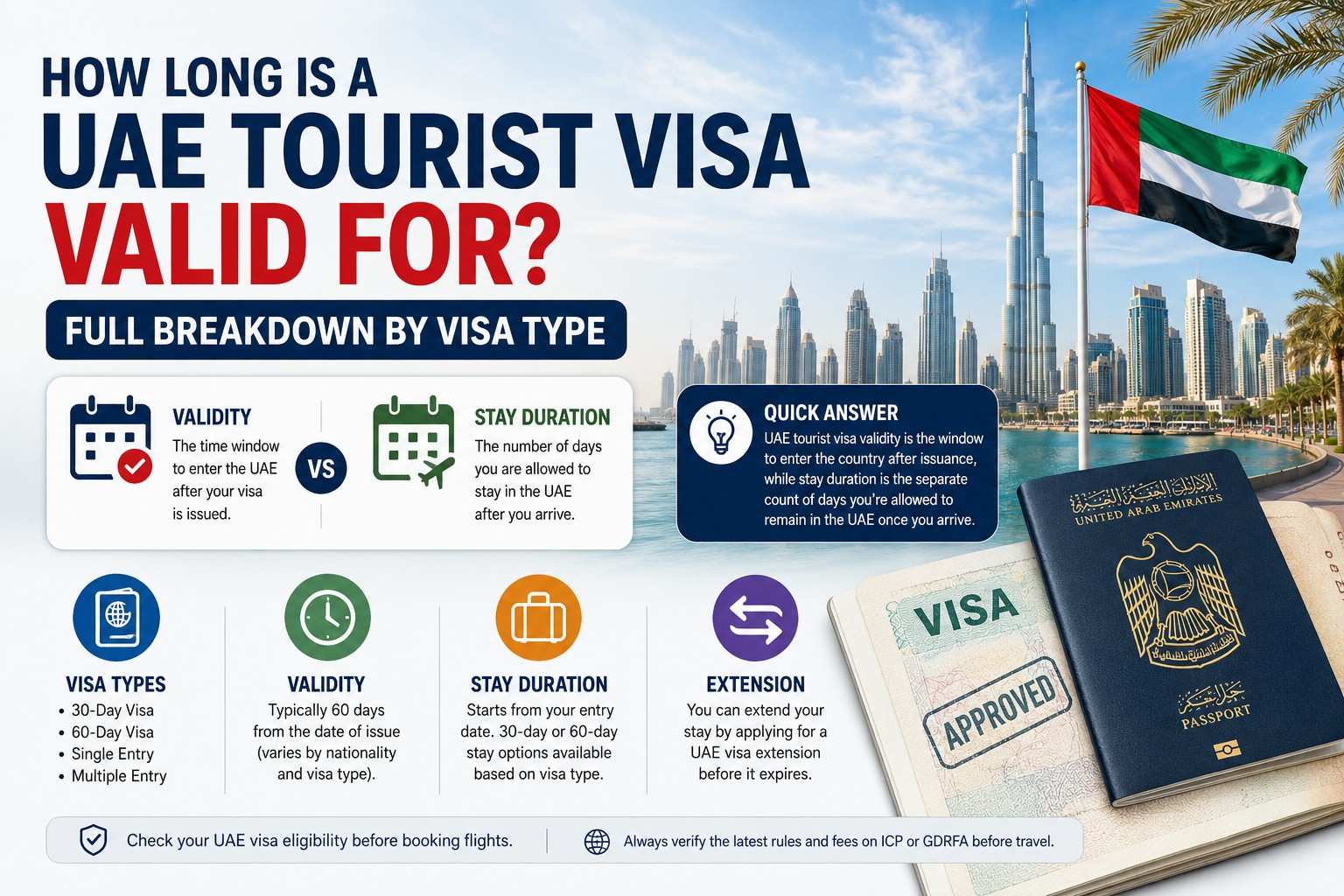
UAE tourist visa validity refers to the window of time you have to enter the country after your visa is issued, while stay duration is the separate count of days you’re allowed to remain in the UAE once you arrive. Validity and stay duration are not the same; they run on different clocks, and mixing them up is the single most common source of confusion for first-time applicants.
Who This Applies To
This guide is written for travellers applying for a standard UAE tourist visa in advance, not for everyone entering the country. If you hold a GCC passport, you don’t need this type of visa at all. GCC nationals move freely into the UAE under separate arrangements. Likewise, UAE residents re-entering on a residence permit follow different rules altogether, and this article won’t apply to them.
There’s also a growing group of travellers who qualify for a visa on arrival based on their passport. If you’re not sure which option suits you, it’s worth checking our UAE visa on arrival update before reading further, since it may save you the cost of applying for a tourist visa in the UAE in advance. For everyone else, the majority of applicants can suit the few baseline conditions that apply. And these sit at the core of most UAE tourist visa rules. Your passport typically needs a validity of at least 6 months. Always verify against ICP or GDRFA before you book. You’ll also need a clean immigration history with no previous visa violations in the UAE, and you may be asked for proof of sufficient funds or a return or onward ticket based on your nationality.
If you’ve reviewed the eligibility rules and you’re ready to move forward. You can apply now for your visa.
Validity vs Stay Duration: The Distinction That Trips People Up
Here’s the part that catches almost everyone off guard. Your UAE visa validity is the. Is the shelf life of the visa itself? Once that window closes, the visa can no longer be used to enter the country, full stop. Your stay duration is completely different. It only starts counting once you land in the UAE. So a 30-day UAE tourist visa doesn’t mean you have 30 days from the date it was issued, which means you have 30 days from the date you arrive.
The UAE now provides various visa types built around this same structure, including the 30-day UAE tourist visa, the 60-day UAE tourist visa, and options for a single-entry UAE visa or multiple-entry UAE visa access. Each covers a validity period with a separate stay allowance. The exact figures are based on your nationality and the visa category you apply under, ICP or GDRFA.
Common Mistakes
Most UAE tourist visa issues aren’t caused by ineligibility; they’re caused by timing mistakes that are entirely avoidable once you understand how validity works. Book the flights before the visa is approved.
- Assuming the UAE tourist visa duration and validity are the same number.
- Applying too early and letting the validity period lapse before travel.
- Waiting till the last few days to request a UAE visa extension.
- Assuming there’s an automatic grace period for late entry or overstay.
It also helps separate the two situations that people mirror. A visa expiring before you travel and overstaying after you’ve already arrived. These lead to very different outcomes.
What Happens If Your Visa Expires Before You Travel
If your visa’s validity window closes before you enter the UAE, the visa becomes unusable. You can’t extend an unused visa past its entry deadline because you need to apply for it from scratch. This is why checking your travel dates against the validity period, not just the stay duration, matters so much.
UAE Overstay Fines: What Happens If You Stay Too Long
Overstaying is different. It happens after entry, once your stay duration has run out. Always verify current overstay penalties through ICP or GDRFA before travel because regulations may change. If you want full details of what triggers refusals in the first place, our guide on UAE tourist visa rejection reasons and how to avoid them covers the most common triggers. And if your dates are tight, read how to extend your UAE visa before you fly. Don’t plan your entry date around validity to avoid a UAE visa rejection mistake.
30-Day vs. 60-Day Tourist Visa: Side-by-Side
Feature | 30-Day Tourist Visa | 60-Day Tourist Visa |
Stay duration | 30 days from entry | 60 days from entry |
| Typical validity to enter | 60 days from the date of issue | 60 days from issue |
| Extension available | Yes, subject to fees | Yes, subject to fees |
| Entry type available | Single or multiple | Single or multiple |
| Best suited for | Short holidays, quick business trips | Extended holidays, longer family visits |
Check your UAE visa eligibility
Single Entry vs Multiple Entry
A single-entry UAE visa allows you to enter the UAE once during the validity window. If you leave the country, that visa can’t be used to re-enter; you need to apply with a fresh one. A multiple-entry UAE visa lets you exit and re-enter as many times as you like within the validity period, which suits travellers doing regional hopping mid-holiday.
| Feature | Single Entry | Multiple Entry |
| Re-entry allowed | No | Yes, within the validity period |
| Cost | Generally lower | Generally higher |
| Best for | One straight trip | Multi-country itineraries |
Worked Example: How the Dates Actually Play Out
Say your visa is issued on January 15. Its validity window runs until 15 March, which means you must enter the UAE by that date. You actually travel and enter on 10 February, well within the validity period. From that entry date, your stay duration clock starts. If it’s a 30-day visa, your permitted stay ends on 12 March. If you needed to remain longer, you’d apply for a UAE visa extension before that 12 March cutoff, not after. Extensions are handled from the original validity period separately and typically come with their own processing time and fees.
Understanding this, like issue date, validity deadline, entry date, and stay deadline, is really the whole trick to avoiding UAE visa validity headaches, and it applies just as much to Dubai visa validity questions since Dubai entries follow the same federal rules. If you’re weighing your options, compare the 30-day visa, 60-day visa, and multiple entry routes against your itinerary before applying, and keep the visa extension page bookmarked just in case. Check your UAE visa eligibility before booking flights.
FAQs
Q. What is the validity period of a 30-day UAE visa?
A. The validity period is the window during which the visa can be used to enter the UAE, and it’s separate from the 30-day stay itself. Always check the exact number of days through ICP or GDRFA.
Q. Is a 60-day visa the same as a 60-day stay?
A. Not quite. The “60-day’’ label refers to your permitted stay duration after entry, not the validity window for entering.
Q. Can validity be extended separately from stay duration?
A. No. Once a visa’s validity window has closed without you entering the UAE, it cannot be extended, because you’d need to submit a new application.
Q. What is the UAE tourist visa validity?
A. It’s the timeframe during which your approved visa remains usable for entry into the UAE.
Q. Can I enter the UAE on the last day of my visa’s validity?
A. Generally, yes, if your entry falls within the stated validity window, including the final day.
Q. What happens if my UAE visa expires before I travel?
A. The visa becomes void for entry purposes. You won’t be able to use it to board your flight or clear immigration, and you’d need to apply for a new visa.
Q. Which UAE visa type is best for a two-week trip?
A. A 30-day UAE tourist visa comfortably covers a two-week trip and leaves a buffer in case your plans shift. A 60-day option is usually unwanted unless you’re planning to extend your stay or use the extra time.
Start Your UAE Visa Application
Once you know which visa type matches your UAE tourist visa duration needs, applying is easy. Have your passport and travel dates ready, then apply now to get your UAE visit visa validity confirmed before you book anything else.